
Dear Examiner,
I would like to thank you for taking the time to read through my assignment. This page has been created for your convenience and will not be accessible to students. This webpage contains my project report, and you will find the required headings below in line with the project report requirements.
Declaration: I used the Blocs website builder to create this project and I am hosting the site on one of my spare domains. It will remain live until the end of the trimester. I did not use any coding languages to build this website, nor did I use generative AI to produce any code for the site.
This website is usable across all breakpoints; however, it is optimised for viewing on a computer.
This submission is a full build. I have built my entire lesson using this website, including the project report. Please read through this report and view the lesson on the relevant pages of the site.
This page contains the updated version for the final assignment. I have left the previous assignment (Assignment 1) unchanged so that you are able to view it if needed. Any new or revised information has been clearly highlighted and explained below, and this content has been bolded in orange for ease of reference (as shown here). Also, please note that this colour is linked to Assignment 1 information, whilst the orange colour is for Assignment 2. This includes buttons on the website.
Previous Tasks Leading up to the Project
Below are the mini tasks that I completed leading up to this project. Please click on the images to enlarge them.
Mini Project 1
Mini Project 2
Mini Project 3
Mini Project 4
Mini Project 5
Introduction
The site is designed so that students can work through the lesson independently while I (or another teacher) move around the room and support them. The main technologies I use are embedded audio, interactive games created with tools such as WordWall and listening based speaking activities. I draw on sociocultural learning theory as my key framework because it views learning as social, mediated and culturally situated, which fits well with language learning and with the diverse Australian classroom (Vygotsky, 1978; Huff, 2024). I also refer to technology integration a such as the Substitution, Augmentation, Modification and Redefinition Model (SAMR) to explain how the website moves beyond simply digitising worksheets and instead reshapes the learning experience (Mishra & Koehler, 2006).
Original Lesson
My original Year 8 Mandarin lesson teaches students how to introduce themselves by saying their name, favourite hobbies and nationality in accurate Mandarin using the correct tones. It also reviews and reinforces other vocabulary and content that they have previously learned such as numbers. After a brief warm up reviewing greetings, numbers and tone recognition, the teacher models three key question and answer structures for self-introduction, with students repeating aloud and recording the sentences in characters and Pinyin. Students then rotate through learning stations where they match characters, Pinyin and English meanings, connect countries to nationality words and practise tone pronunciation with immediate feedback. After the learning stations, the students move on to partner interviews using a dialogue sheet, taking turns asking and answering the target questions while the teacher assesses fluency and tone accuracy. The lesson ends with students writing one Mandarin sentence introducing themselves as an exit ticket, demonstrating their ability to apply the structures independently.
The original lesson focuses on enabling Year 8 students to confidently introduce themselves in Mandarin by stating their name, age and nationality, which is reflected in the learning outcomes, lesson objectives and success criteria that emphasise accurate pronunciation, correct sentence structures and the ability to ask and answer personal questions. These same core goals are kept in the digitised version of the lesson, but the website enhances access to them by providing embedded audio models, interactive matching tasks and repeatable practice activities that reinforce tones, vocabulary and sentence patterns in a more individualised and self-paced way. While the original classroom lesson relied on teacher modelling, physical flashcards and peer interviews, the digital lesson replicates each component through multimodal tools that support visual, auditory and interactive engagement. The only pitfall I found was trying to incorporate the collaborative aspect of the group rotations in the original lesson into the digital lesson. I supplemented this with interactive games that I created. As a result, the digital format maintains the fundamental intentions of the lesson while expanding opportunities for practice, feedback and differentiation without altering the core language skills students are expected to demonstrate. This lesson also maintains that same learning outcome of ML4-INT-01 – Exchanges information and opinions in familiar contexts using culturally appropriate language (NESA, 2024).


Remixed Lesson
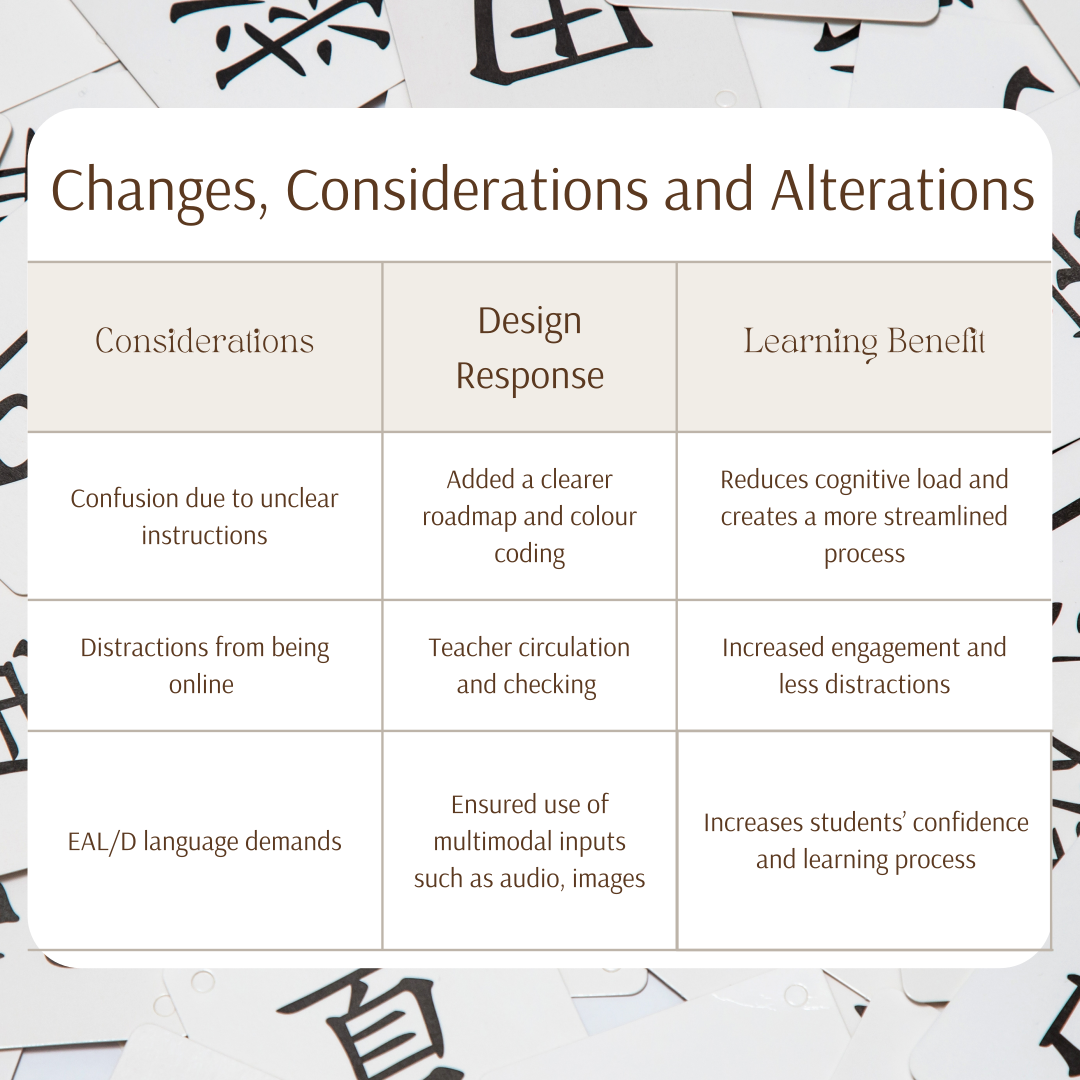
My Year 8 class includes students with a range of linguistic and cultural backgrounds including EAL D learners and Aboriginal and Torres Strait Islander students. When I designed the site, I wanted to ensure the technology supported these students rather than creating additional barriers. For EAL D learners, the combination of images, audio, Pinyin and minimal English text is important. Many Mandarin learning resources assume strong English literacy, which can disadvantage students who are still developing English. NALDIC (2005) stresses that digital tools can provide valuable scaffolds for EAL D students through multimodal input, repetition and reduced pressure. On my website learners can listen directly to the Mandarin, view the image and read the Pinyin without needing extensive English explanations. Game based tasks also create a safe space for mistakes, which research shows increases willingness to take risks in speaking (Chen & Jang, 2010). Moreover, for Aboriginal and Torres Strait Islander students I am mindful of the strengths in oral learning and storytelling. The site places a strong emphasis on listening and speaking, and the Exit Ticket encourages learners to tell their own story in Mandarin. This allows them to connect the language to identity and experience, which aligns with culturally responsive pedagogy discussed in the Australian context (Huff, 2024). The structure also allows space for face-to-face discussions about identity and belonging with the teacher if needed. I believe that this style of classroom supports equity of access and aligns with the Australian Curriculum’s aim to provide inclusive and high-quality learning experiences for all students.
Learning Design Implementation
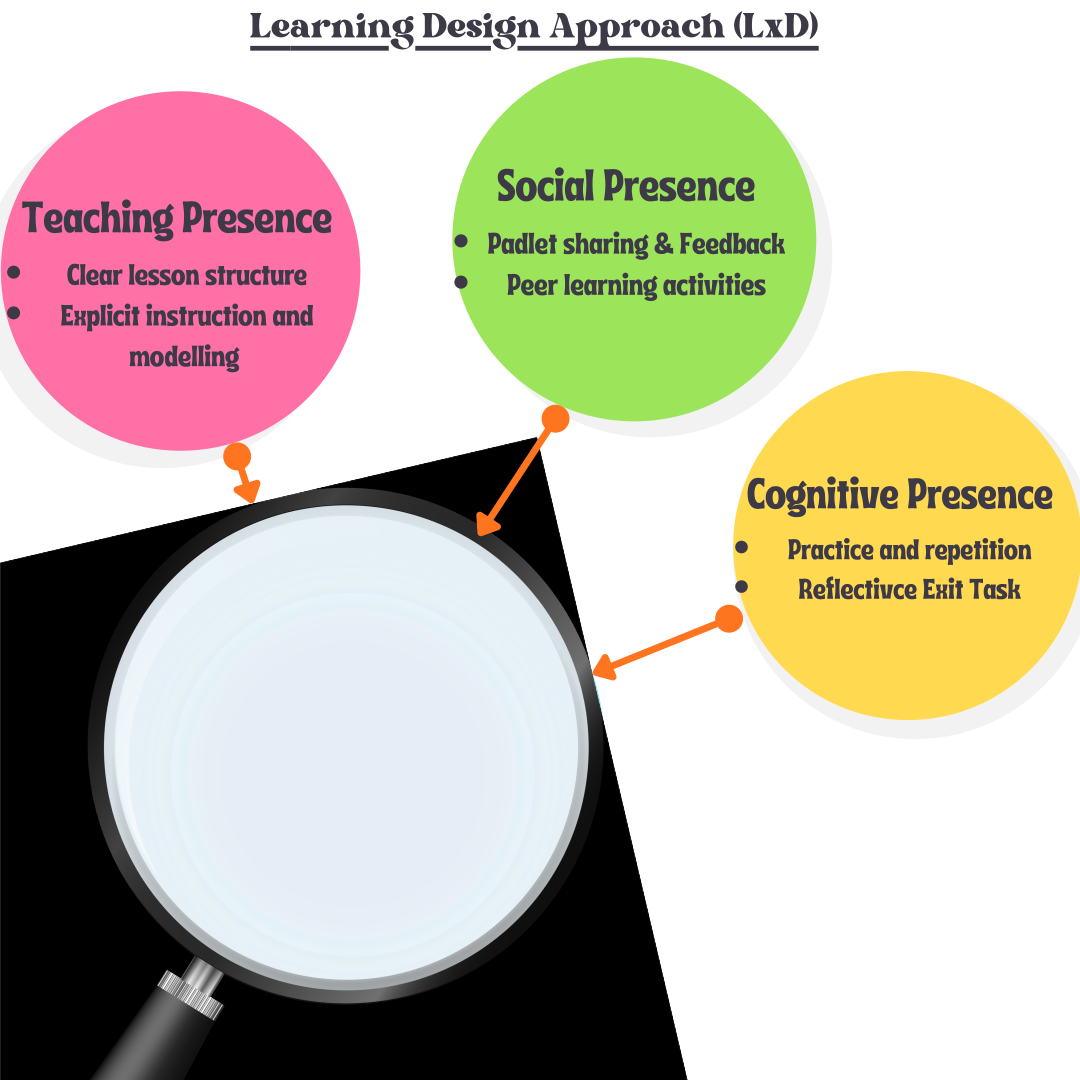
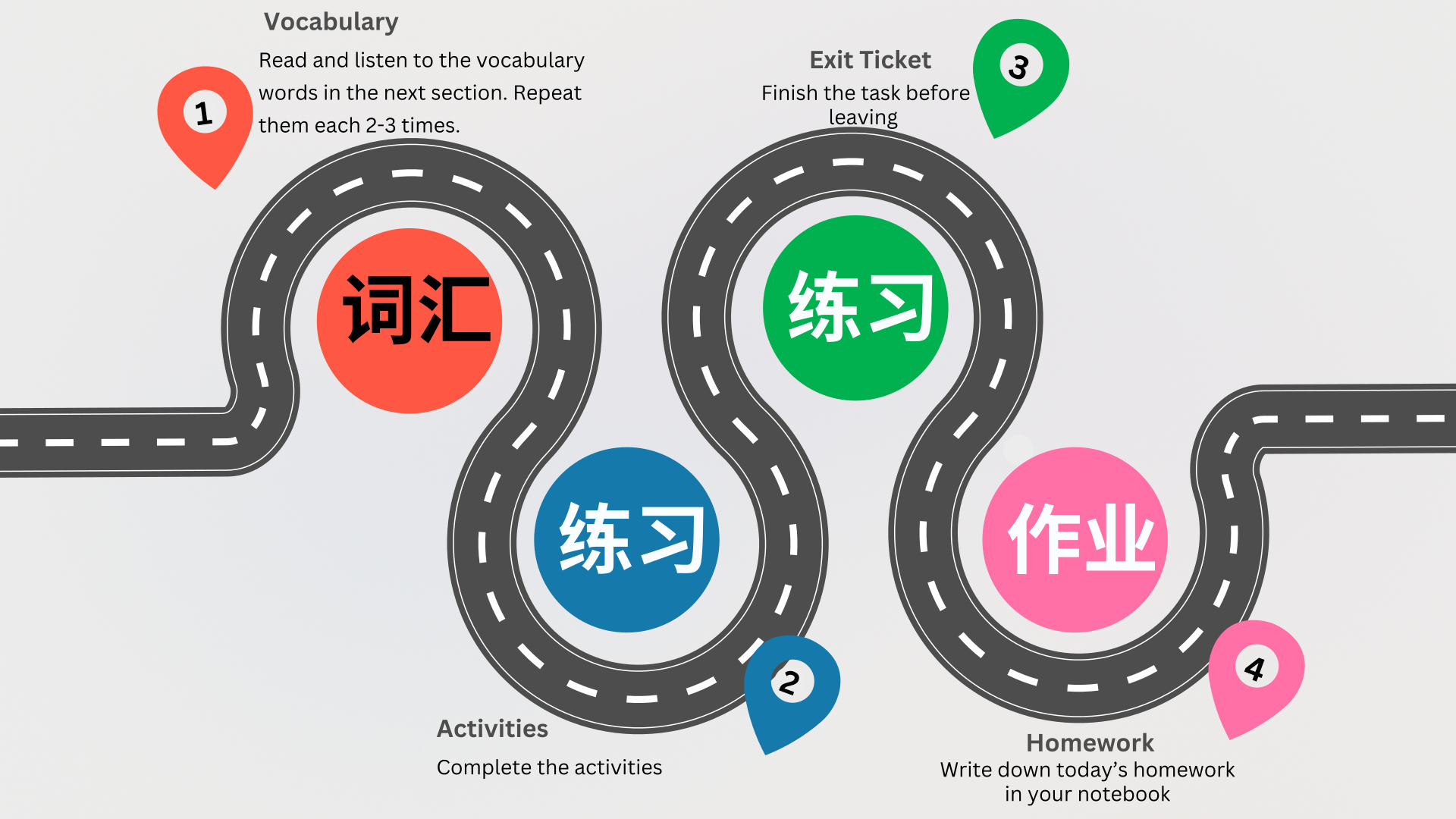
The design and content of my lesson are guided by a learner-centred Learning Experience Design (LxD) approach, which emphasises how learners engage with content, tools and each other across the learning journey rather than focusing on the technology alone (Tawfik et al., 2021). This website has been intentionally structured as a clear, sequential pathway, with colour-coded sections for vocabulary, activities, exit tickets and homework. I further refined the design to include a clearly organised, two-column instruction layout at the beginning of the lesson, separating what students will learn from what students will be able to do. The lesson's purpose, success criteria and working instructions are displayed clearly to supports learner’s and reduce ambiguity, particularly for students who benefit from explicit guidance. In addition, a colour-coded visual “roadmap” was added to help students clearly see the sequence of tasks and expectations throughout the lesson.
These layout decisions support learner self-regulation by making expectations and progression visible, which is particularly important in technology-enhanced environments (Morville, 2004). From a Community of Inquiry perspective, the design integrates teaching presence as the teacher will be moving around the room monitoring the students. Also, clear explicit instructions and modelling are used. Cognitive presence is being used by repeated practice and reflective exit tasks, and social presence is utilised through peer interaction using Padlet (Garrison et al., 2000). Overall, the learner-centred LxD approach allows student strengths, such as oral language skills, self-pacing and peer learning, to be leveraged through multimodal input and collaborative tasks, rather than constrained by text-heavy instruction.
Tackling Barriers
Several potential barriers were addressed through these design decisions, including cognitive overload, varying levels of digital confidence and linguistic demands for EAL/D learners. Research suggests that poorly structured digital lessons can overwhelm learners and negatively impact engagement (McLoughlin & Luca, 2002). To moderate this, the lesson is designed around a clear, colour-coded learning pathway, as shown in the visual roadmap, which guides students sequentially through vocabulary, activities, exit tickets and homework. The use of consistent layouts, minimal text, visual cues and embedded audio reduce reliance on extended Mandarin and English explanations while supporting comprehension through multimodal input. The use of distinct colours for each lesson stage helps students quickly identify task types and expectations, reducing cognitive load and supporting independent navigation. This aligns with principles of effective learning experience design, which emphasise clarity, predictability and visual organisation to support learner engagement and self-regulation (Tawfik et al., 2021).
Technology / Technologies
The core digital feature of the website is embedded audio. Every key word and sentence has a clear recording so students can hear accurate tones and pronunciation, then repeat aloud. This is essential for Mandarin because tones change meaning and are difficult for beginners to hear and produce. Audio gives students their own on demand model that they can replay as often as they need. This supports self-paced learning and mirrors the idea in sociocultural theory that tools mediate learning between teacher and student (Vygotsky, 1978). Moreover, as the audio lives on the site, the students are able to access the recordings at any time, supporting their learning out of the classroom as well. In addition, I also used interactive games that I created using Wordwall. Game based learning research shows that interactive digital tasks increase motivation and provide repeated, low risk practice that strengthens language retention (Masrom et al., 2025). For my students, these games turn the repetitive and mechanical task of memorising vocabulary and sentence structure into a fun and interactive practice. They receive immediate feedback, can try again and can visualise their progress, which aligns strongly with sociocultural ideas of mediated learning (Huff, 2024). Furthermore, they are tasked with a non-digital activity after each game to ensure they are practicing core skills such as writing and to test their understanding of the content.
Teaching with Technology
My teaching approach in this lesson is communicative and task based. The lesson moves through modelling, guided practice and independent production. First, students review vocabulary on the website by listening and repeating. This section could also be teacher led. For example, the teacher could lead the students first through the pronunciation of the vocabulary words and then instruct students to pronounce the words again by listening to the audio. This way, the teacher begins the lesson with engagement and allows the students to still have autonomy in their pacing for the class. This reflects King’s constructivist view of teaching, where the professor’s role is to "facilitate students’" interaction with the material and with each other as they build knowledge (1993). In this model, the student is descirbed as a “capenter” who “uses new information” to “construct new knowledge structures,” which mirrors the way students in this Chinese lesson combine audio, written tasks and collaborative activities to develop meaningful uderstanding of Mandarin (King, 1993) .
A short study by the State of Victoria Department of Education found that a set of Mandarin learning students who engaged with digital media when learning benefitted as the "Students demonstrated their learning by producing original audio, video and written texts” (2012). After that, the students are then instructed to complete various online activities including listening to dialogues, writing transcripts, reading a passage and answering questions. They then must complete the Exit Ticket by writing their own self introduction in Chinese in order to leave the classroom. Finally, they are assigned homework. Throughout the lesson they use a notebook to write Chinese characters and Pinyin. This was done purposefully so that the teacher has evidence that the students are interacting nd engaging with the material. Also, Zhang et al. (2021) shows that students benefit when digital activities such as listening and gaming are paired with traditional writing tasks, as this combination strengthens engagement and supports better consolidation of language learning. Furthermore, the SAMR model helps explain the role of technology in this lesson. For example, the augmentation of digitised vocabulary enhances the lesson. Cáceres-Nakiche et al. (2024) explains that augmentation enriches learning by adding functional improvements such as multimedia elements, while modification enables “significant tasks, which could not be performed without the digital resource” (p. 162). This directly aligns with the shift in my digitised lesson, where vocabulary becomes multisensory through audio and images at the augmentation level, matching activities and instant feedback reflect modification, and student-generated Padlet recordings represent true redefinition by creating a learning product only possible through digital means (Cáceres-Nakiche et al., 2024). Other activities help add modification because they reshape the task entirely. Matching activities and immediate feedback significantly change how practice works compared with paper versions. For homework, the students are asked to record their self-introduction (exit ticket) and share it with their peers on Padlet. This demonstrates redefinition by creating a task only possible through digital means (Masrom et al., 2025).
Reflection
When I first submitted the initial version of this assignment (Assignment 1), the website had not yet been trialled with students and my reflection was largely based on intended design choices and theoretical planning. Throughout the project, I learned a great deal about using technology in practical and engaging ways. Early on, I explored several applications I had used previously, including Flipgrid. However, when I attempted to access it, I discovered that the platform had been discontinued. As a result, I transitioned to Padlet, which offers similar functions for recording and sharing student work and embedded seamlessly into the website. This change ultimately strengthened the lesson and encouraged me to think more critically about flexibility and sustainability when selecting digital tools.
Due to planning and time constraints within the teaching week, I was unable to deliver the digitised lesson to the whole class. Instead, I trialled it with a small group of students who had completed core class tasks ahead of their peers and engaged with the digital lesson as an extension activity during the following lesson. This allowed the selected students to work independently through the site while I explicitly taught the rest of the class. Observing this small-group trial was valuable, as it provided insight into how students managed the lesson without direct teacher instruction. The structured design, clear progression and multimodal scaffolding supported students in navigating the lesson confidently, suggesting that the design choices helped mitigate common barriers associated with independent digital learning. The students engaged positively with the audio modelling, interactive activities and recording tasks, which increased my confidence in the effectiveness of the lesson design.
Based on peer and instructor feedback, as well as learning from Weeks 9–12, I revised both the lesson design and the website layout. Key changes included clarifying instructions, improving visual organisation through colour-coded sections, and explicitly embedding collaborative learning through Padlet. I also strengthened the theoretical framing by more clearly linking design decisions to Learning Experience Design, the Community of Inquiry framework and inclusive pedagogy. These revisions were made to reduce cognitive load, support learner navigation and better accommodate diverse learners, particularly EAL/D students. While the lesson will continue to benefit from further refinement, this process has reinforced my confidence that thoughtfully integrated technology can increase engagement and support students’ willingness to use Mandarin in meaningful and communicative ways (Tawfik et al., 2021; McLoughlin & Luca, 2002).
References
Cáceres-Nakiche, K., Carcausto-Calla, W., Yabar Arrieta, S. R., & Lino Tupiño, R. M. (2024). The SAMR model in education classrooms: Effects on teaching practice, facilities, and challenges. Journal of Higher Education Theory and Practice, 24(2). https://doi.org/10.33423/jhetp.v24i2.6816
Chen, K. C., & Jang, S. J. (2010). Motivation in online learning: Testing a model of self determination theory. Computers in Human Behavior, 26(4), 741–752. https://doi.org/10.1016/j.chb.2010.01.011
Huff, T. (2024). Socioculturalism. In Design in progress: A collaborative text on learning theories. University of Technology Sydney.
Garrison, D. R., Anderson, T., & Archer, W. (2000). Critical inquiry in a text-based environment: Computer conferencing in higher education. The Internet and Higher Education, 2(2–3), 87–105. https://doi.org/10.1016/S1096-7516(00)00016-6
King, A. (1993). From sage on the stage to guide on the side. College Teaching, 41(1), 30–35. https://doi.org/10.1080/87567555.1993.9926781
Masrom, U. K., Ahmad, W. F. W., Shamsuddin, N. H. M., & Hashim, H. (2025). Learners’ experiences in using Moodle Lesson and H5P interactive content in learning public speaking. MEXTESOL Journal, 49(1).
McLoughlin, C., & Luca, J. (2002). A learner-centered approach to developing team skills through web-based learning and assessment. British Journal of Educational Technology, 33(5), 571–582. https://doi.org/10.1111/1467-8535.00292
Mishra, P., & Koehler, M. J. (2006). Technological pedagogical content knowledge: A framework for teacher knowledge. Teachers College Record, 108(6), 1017–1054.
Moore, M. G. (1989). Three types of interaction. The American Journal of Distance Education, 3(2), 1–7. https://doi.org/10.1080/08923648909526659
Morville, P. (2004). User experience design. Semantic Studios.
National Association for Language Development in the Curriculum. (2005). Using ICT to support students who have English as an additional language. NALDIC.
NESA. (2024). Modern Languages K–10 - Course overview | NSW Curriculum | NSW Education Standards Authority. Curriculum.nsw.edu.au. https://curriculum.nsw.edu.au/learning-areas/languages/modern-languages-k-10-2022/overview
Tawfik, A. A., Gatewood, J., Gish-Lieberman, J. J., & Hampton, A. J. (2021). Toward a definition of learning experience design. Technology, Knowledge and Learning, 26(4), 811–830. https://doi.org/10.1007/s10758-020-09482-2
Vygotsky, L. S. (1978). Mind in society: The development of higher psychological processes. Harvard University Press.
Zhang, R., Zou, D., Cheng, G., Xie, H., Wang, F. L., & Au, O. T. (2021). Target languages, types of activities, engagement, and effectiveness of Extramural Language Learning. PLOS ONE, 16(6). https://doi.org/10.1371/journal.pone.0253431
Other Requirements
Note: The audio I used for the website was extracted from these sources:
Sophie Chinese,. (2023). Introduce Yourself in Chinese丨Beginner Chinese. https://www.youtube.com/watch?v=yqsElZwBd-w&t=25s
Everyday Chinese, (2017a). How to Say Your Nationality/Country Name in Mandarin Chinese - Day 5 guó jiā (Free Chinese Lesson). YouTube. https://www.youtube.com/watch?v=mHV79ZSNzfE
Everyday Chinese, (2017).. “What’s your name?” in Chinese #Day 3 Nǐ jiào shén me míng zi (Free Chinese Lesson). YouTube. https://www.youtube.com/watch?v=yMebwotqRHg
Everyday Chinese, (2018). 100 Daily Chinese Conversations (Part 1) - Learn Mandarin Chinese Listening & Speaking. YouTube. https://www.youtube.com/watch?v=V-zIW9s4DFQ&t=604s